|  Historic Preservation is "Green"
And it always has been! Check out these facts from the National Trust for Historic Preservation President Dick Moe's speech on accepting the Vincent Scully Prize from the National Building Museum on December 13, 2007:
"The retention and reuse of older buildings is an effective tool for the responsible, sustainable stewardship of our environmental resources - including those that have already been expended. I'm talking about what's called "embodied energy."
"Here's the concept in a nutshell: Buildings are vast repositories of energy. It takes energy to manufacture or extract building materials, more energy to transport them to a construction site, still more energy to assemble them into a building. All of that energy is embodied in the finished structure - and if the structure is demolished and landfilled, the energy locked up in it is totally wasted. What's more, the process of demolition itself uses more energy - and, of course, the construction of a new building in its place uses more yet.
"Let me give you some numbers that will translate that concept into reality."
* According to a formula produced for the Advisory Council on Historic Preservation, about 80 billion BTUs of energy are embodied in a typical 50,000-square-foot commercial building. That's the equivalent of 640,000 gallons of gasoline. If you tear the building down, all of that embodied energy is wasted.
* What's more, demolishing that same 50,000-square-foot commercial building would create nearly 4,000 tons of waste. That's enough debris to fill 26 railroad boxcars - that's a train nearly a quarter of a mile long, headed for a landfill that is already almost full.
* Once the old building is gone, putting up a new one in its place takes more energy, of course, and it also uses more natural resources and releases new pollutants and greenhouse gases into our environment. Look at all the construction cranes dotting the Washington skyline, and consider this: It is estimated that constructing a new 50,000-square-foot commercial building releases about the same amount of carbon into the atmosphere as driving a car 2.8 million miles.
* One more point: Since 70% of the energy consumed over a building's lifetime is used in the operation of the building, some people argue that all the energy used in demolishing an older building and replacing it is quickly recovered through the increased energy efficiency of the new building - but that's simply not true. Recent research indicates that even if 40% of the materials are recycled, it takes approximately 65 years for a green, energy-efficient new office building to recover the energy lost in demolishing an existing building. And let's face it: Most new buildings aren't designed to last anywhere near 65 years.
Click here to read Richard Moe's entire acceptance speech. |

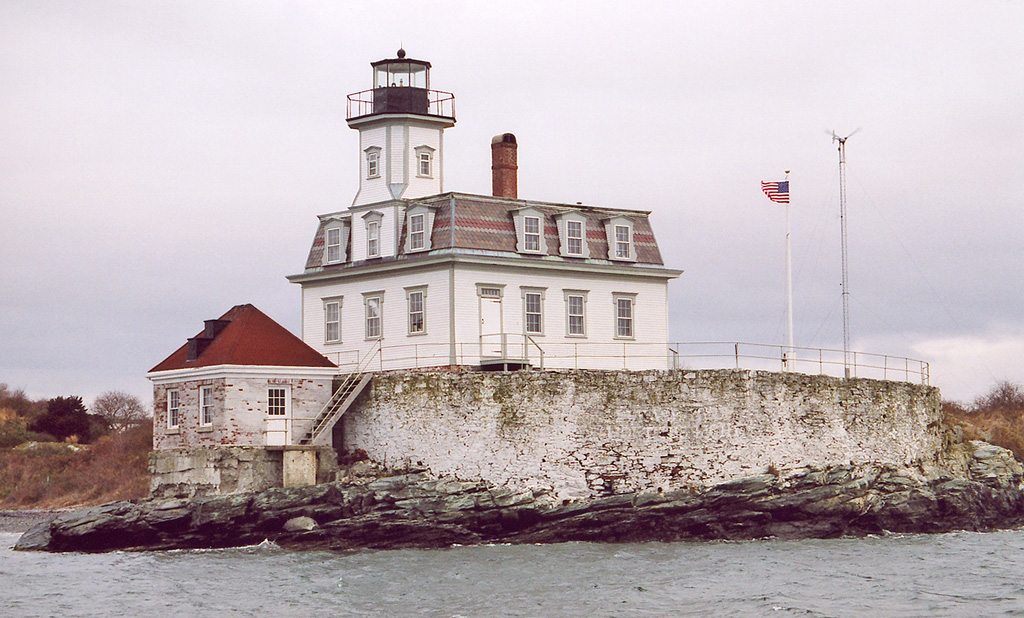 Rose Island Lighthouse Foundation seeks a resourceful and motivated Executive Director to continue its mission to preserve the historic and environmental integrity of Rose Island, to maintain and operate its lighthouse, and to provide education and public access for all people. Rose Island Lighthouse sits in Narragansett Bay, one mile off shore on an 18.5-acres island. It now operates as a hands-on demonstration center and living classroom to teach stewardship, conservation and sustainable living. For a full candidate profile, go to


No comments:
Post a Comment